
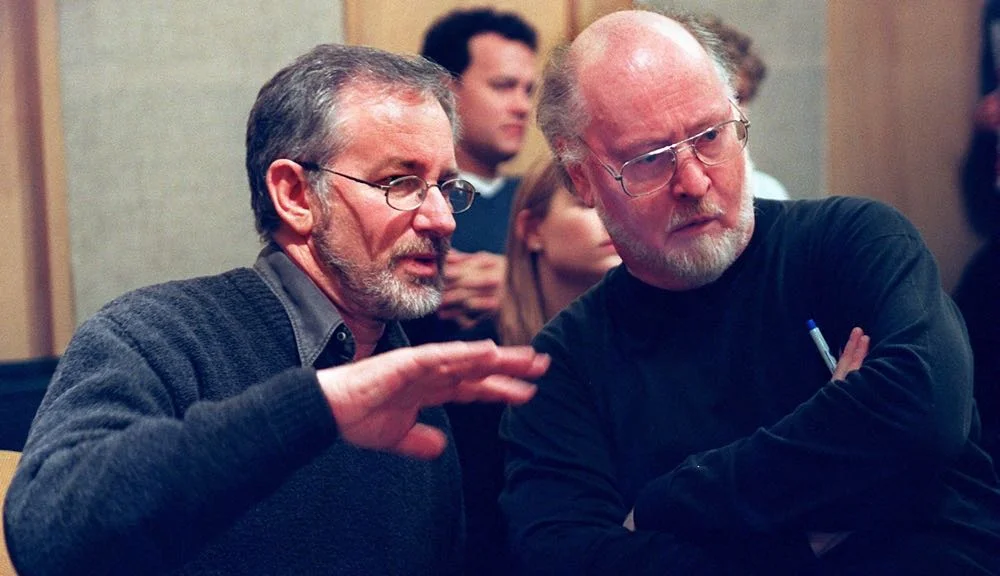
Composer and director relationships - how do you know if you have a good one?
Filmmaking is in part, about relationships. And one important relationship is between the two people that bring music and picture together, aka the composer and director.
Music is such an important part of the film. It helps support the storyline, conveys emotions and helps to set the tone and mood of the film. It’s closely related to the pacing set by editing, and overall is an integral part of any film. So, the relationship between the director, whose every effort is put forward to convey the best version of the film they can, and the composer is super important. While there are other people the director needs to work closely with (the DP, editor, Assistant director and producer, just to name a few) I would go out on a limb and say that the relationship between the director and composer is one of the most important to get right.
Once a director and composer find each other, how do they know if the working relationship is going to…. well, work? In my experience working with directors, the best collaborations I have had all generally have had the same things in common.
One of the things that I found to be a good sign, is when there is mutual respect of each other’s work, and with that, an understanding of what each person brings to the table. Without a film, there would be no film score, and without a composer, a film would have no sonic accompaniment. Since I’ve been working primarily in the independent world, I know that the directors I’ve worked with wear different hats at varying times. Not only did they probably write the script, they are often responsible for hiring the actors and the other crew they will need, depending on what the producer is handling. It takes an incredible amount of hard work and grit to go from an idea to a finished project, and I have an enormous amount of respect for what they accomplish. If a composer has respect for a director’s work and there is an understanding of how the composer can enhance the film and the director has the foresight and ability to acknowledge what the composer brings to the table, then that is a good sign that the relationship has a strong footing.
In addition to all of the creative aspects of the film, there is quite a lot of people management to deal with. The last thing a composer should be, is one of the difficult people a director needs to deal with! So, while this point falls a bit more on qualities a composer should have, I would say a healthy collaboration is comprised of people whom aren’t difficult to work with, but are cognizant of how to get things done in a timely manner. After all, the goal of this is to create something magical, and if there is animosity between two people, that is probably going to come out in the final product! When a director and composer are getting to know each other, it should be easy-going and almost like a budding friendship, because at the end of the day, despite the fact that one person is hiring another person for their creative services, you’re both human beings, and its going to be a better collaboration if you treat each other as if you could be friends.
As is the case with any relationship, communication is key. Whether its communicating deadlines, discussing spotting notes, or staying organized with revisions, maintaining solid communication during the film scoring process (and even before and after) is a really important thing to have to make a director-composer relationship work well. I’ve had some fantastic communication experiences, and then a couple not so great ones, and I definitely learned from all of them!
Finally, and this one is the most nuanced but very important, is that the director and composer need to be on the same page creatively. Maybe they don’t need to both be working in identical genres, but there should be a clear understanding, on the part of the composer, of what the director is looking for musically and emotionally for their film, and a director, hopefully has some vision for what the music should be doing, even if they don’t have a lot of examples or know exactly what they want. Formulating what is going to be written and where is a process that takes some time to determine over the course of many conversations, so it’s ok if the two don’t have all of the answers immediately. I’ve worked with some directors that knew exactly what they wanted, and others that gave me a largely blank slate to work from. And both situations can be really wonderful and productive.
There have been some incredibly fruitful director – composer relationships. Here are the most well known!
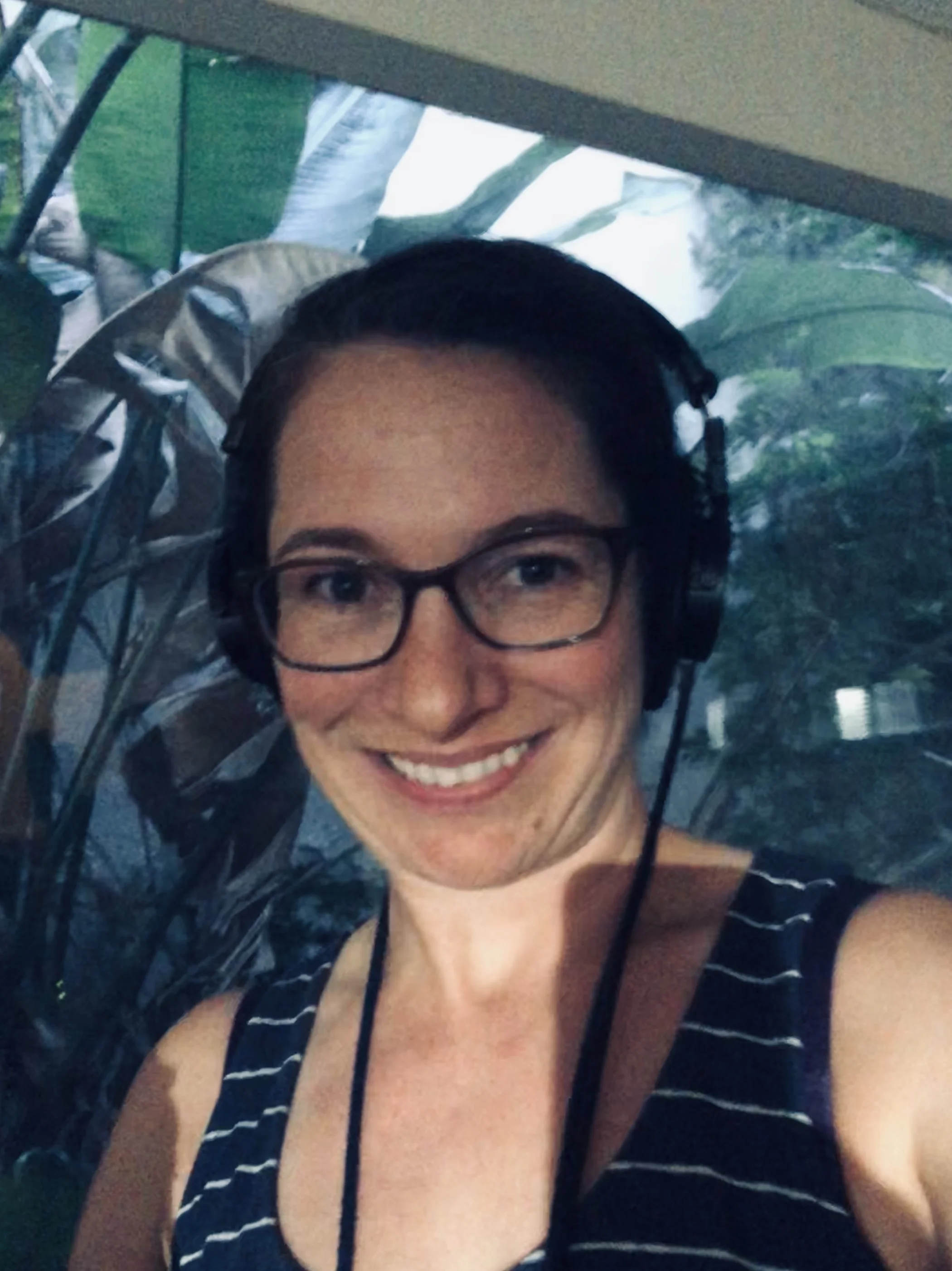
That one time I moonlighted as a sound recordist.
I was asked to do the on set sound for a short film, a sci-fi drama written and directed by the ever-talented, Taegen Carter, whom I’ve worked with several times before. Not only was I going to do the music, I was asked to record the sound which I gladly jumped at the chance to do. What other way to actually be on set and participate in the production of a film than to be working on one part of a film I would be working with on the post side anyways? So what follows is my observations on the entire experience.
Recording on set sound for the film, Variance
Los Angeles Shoot
Day One:
The boom mic can get quite heavy! At first, I was panicking internally because I thought “no way in hell I’m going to be able to do this for 3 days straight, and then again in Oregon.” But there are some tricks to holding the boom mic, one thing is that it is possible to balance it on one’s head. Well that works until I realized that it’s entirely possible that the boom pole is picking up the weird creaky sounds that are coming from the headphones and traveling up boom pole and being recorded into the mic. So that technique was short-lived. We were doing a wide angle shot so I had to keep the microphone and boom out of the frame, as well as my arms. To give me a vertical boost (I’m just 5’4”) the DP gave me two apple boxes to stand on which made it possible for me to keep everything, including my arm out of the frame. As long as I was careful to not bump the mic on the slats in the ceiling in the garage we were shooting in, everything would be fine. Just fine! So in between takes I could rest my arms, and then just have to be “on” for the scene, which wasn’t very long. It’s really interesting to see the process of the director coaching the actors, and the variations between each takes.
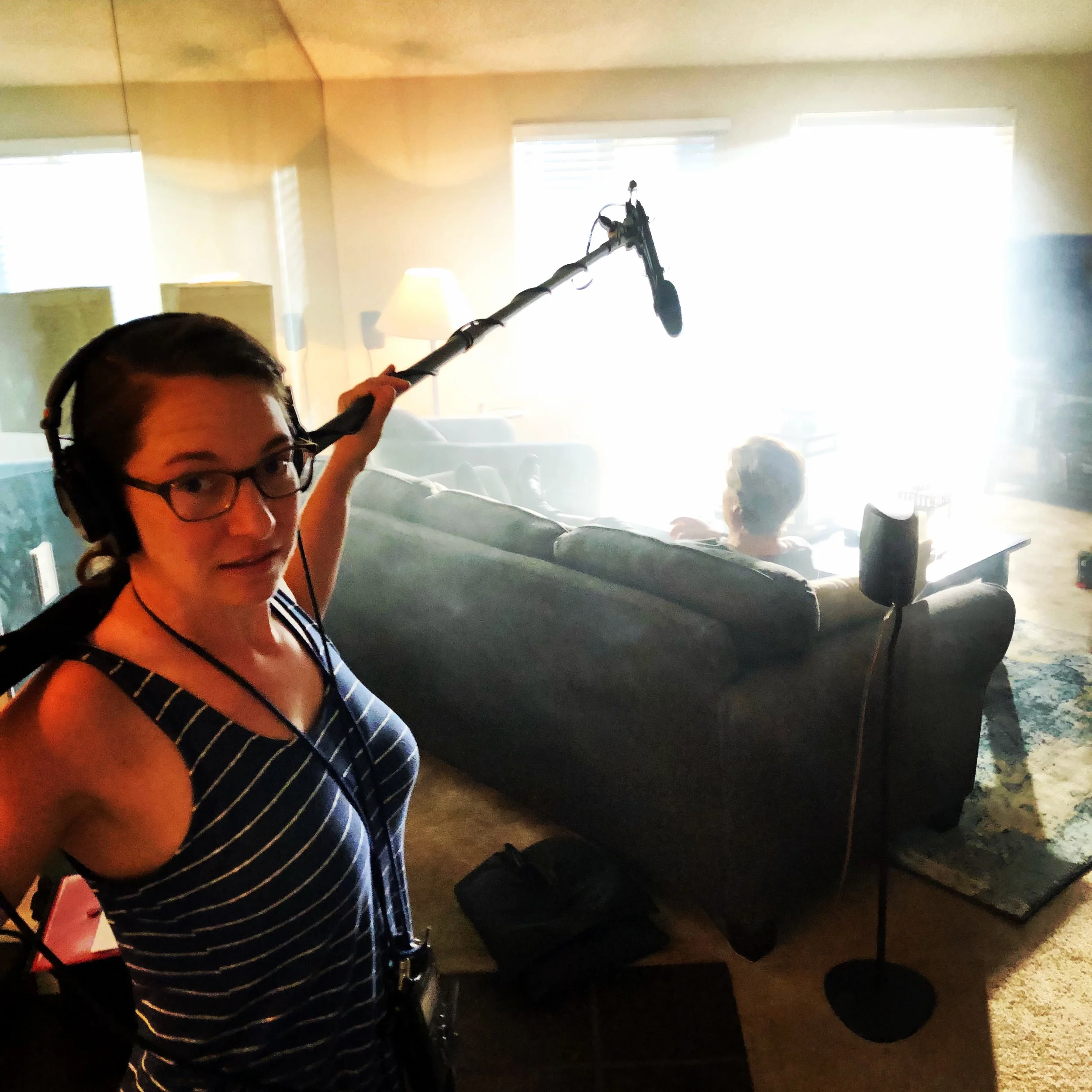
Holding the boom mic, good thing I work out.
Day Two:
Day two went smoother for me, as I was able to navigate the boom pole better and figure out how to hold it in a way that wasn’t as tiring. We did a lot of daytime shots in the kitchen and I had to do some back and forth recording of the dialogue from different angles. The process is so much fun to see it all come together, especially since each shot is carefully planned out by the director and the lighting and framing of each shot is a combined effort put forth by the director, DP and gaffer. When you watch a film, you may not even think about the different angles that the actors are shot in, but literally everything is planned out down to the most minute detail.
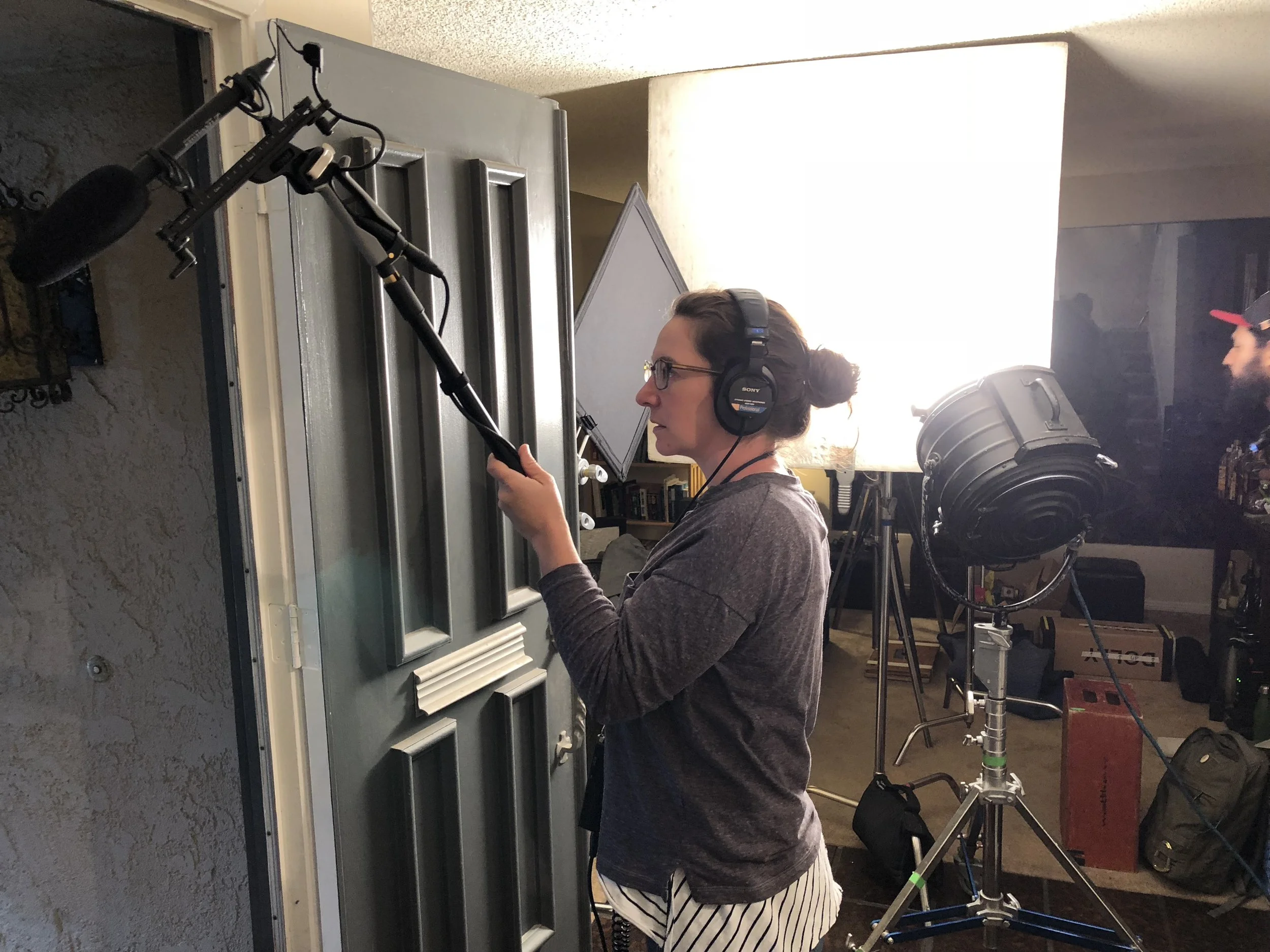
Steady…..Steady…..
Day Three:
Well I am just a pro at this now! It certainly helps to be a musician and understand a thing or two about audio, but it also helps that I work out at the gym regularly! No but seriously, even though the first day of shooting was probably the hardest, as I was thrown into the whole project with probably the most difficult shot, I would say the fact that I lift weights must help me somewhat in holding the boom pole. There is quite a bit of downtime involved in shooting a film, as the sound person isn’t needed while the director and crew are setting up the shots. While it can be a really long day of overall work, the actual time spent working is much less.
The next time I’ll be recording sound for this film will be in Oregon on a beach! We anticipate some different challenges, while there will only be natural lighting to work with, cutting down on the prep time for each shot, I do think there will be some other things to contend with. One will be the weather as it will be in Oregon, on a beach in December, so I imagine that it’s going to be cold. The other thing is that it’s going to be windy, so we will be putting a “blimp” and what the director calls a “dead wombat” over the mic. The blimp and the dead wombat both serve to block out the sounds of the wind which, if anyone has heard bad sound, is just awful. Think about how when you’re talking to a friend out on a windy beach, how freaking annoying it is to be on the receiving end (no pun intended) of all that whipping wind sound. No Bueno. So luckily, smart people created “blimps” and “dead wombats” (well, actually no one created those in real life, they just died) to combat this potentially sound damaging phenomenon.
Next stop, Neskowin Oregon, for the second part of my experience on the production side of a film!

We made it to Neskowin Oregon! After a super early morning flight with the director, DP and 1st AC, we traveled with 4 equipment cases holding the Red Camera (the director uses a Red Helium which shoots in 8K), lenses, sound equipment and everything else. Because this is an outdoor shoot, we didn’t need to bring anything related to lighting so that makes the transport just a bit more compact. Once we landed, we made our way to Neskowin which is a 2-hour drive southwest from Portland through quite a bit of wooded forest areas. It is almost like a rainforest in this part of the country, albeit a cold one.
Neskowin, Oregon Shoot
Day Four:
We started shooting on the beach in Neskowin! It’s crazy pretty here, albeit the weather will prove to be a challenge for the next three days. It rains intermittently, and it’s cold, and sometimes windy. So, the actors and crew will be really facing the elements and since all of us are used to balmy Los Angeles weather, it’s definitely a contrast. There isn’t a ton of dialogue in this film, so I wasn’t needed the whole time consistently, but I was able to capture some ocean waves and other environmental sounds that could be useful in the film. The mic we were using is super sensitive and directional (a Sennheiser), so I kept hearing what sounded like a rhythmic fluttering. At first, I thought it might have been one of the actor’s ponchos flapping in the wind, but it turns out, after further investigation, that my mic was picking up birds flapping their wings while they bathed in the creek that runs into the ocean! Mystery solved.
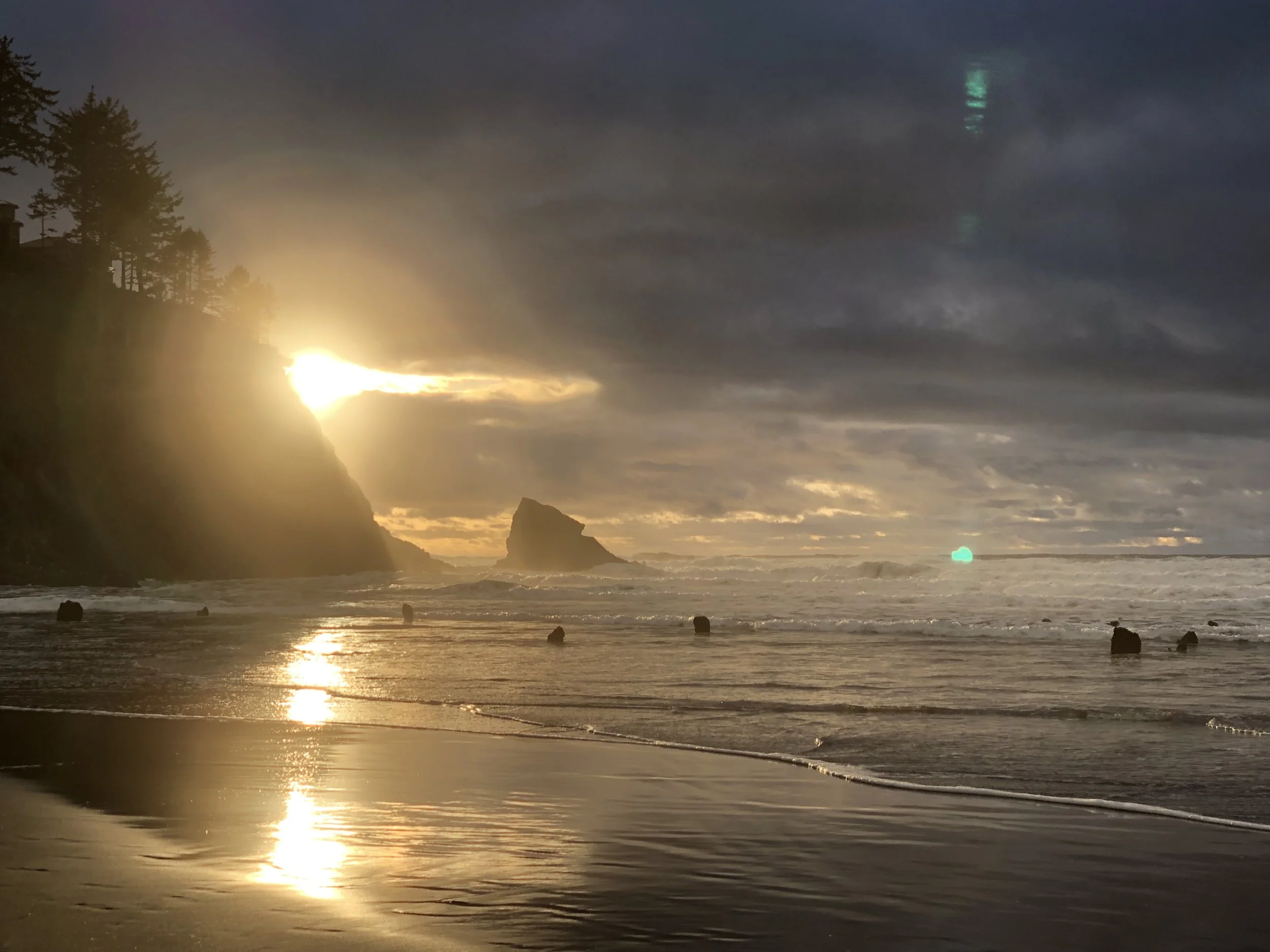
This is for realz what it looks like here. Well, the green lens flare is not really there.
Day Five:
The toughest thing about this day of shooting was the cold and the rain, and apparently nearly losing all of the equipment in a crashing wave! I missed this part actually, I was back at the nearby house we rented, enjoying some downtime by the fireplace, but anyways, I was there in spirit. Nonetheless I heard about it, and it was quite a harrowing tale. The DP picked up the camera on the tripod just in time, and the 1st AC dove for the two equipment cases, but they both got quite drenched. Nature just doesn’t care about your expensive equipment, does it? Thankfully the cases are actually waterproof and airtight as the manufacturers know the people would be filming outside. But what a nice little raft they could’ve ended up being, towed out to sea had the 1st AC not rescued them.
For me, being out on the beach this particular day was an interesting experience as when I was watching some of the shots being filmed, I was able to start hearing some of the musical ideas in my head. Composers tend to get the film when it is all edited and ready to be worked on, I don’t know how often they actually get the opportunity to visit the set and actually be on the production side as well. Seeing all of the shots that need to be filmed to construct one scene is insane, there are so many set ups for just one moment. We as viewers definitely take this for granted, that every time a scene is shot at a different angle, there is an entirely different set of shots that the actors and everyone else has to go through repeatedly to film. Not to mention, the same set up can be filmed using multiple lenses. Can you imagine how difficult it must be for the director and DP to remember every single eye line and angle in order to keep things consistent between set-ups for just one scene? It’s an amazing feat, one that I will never take for granted again.
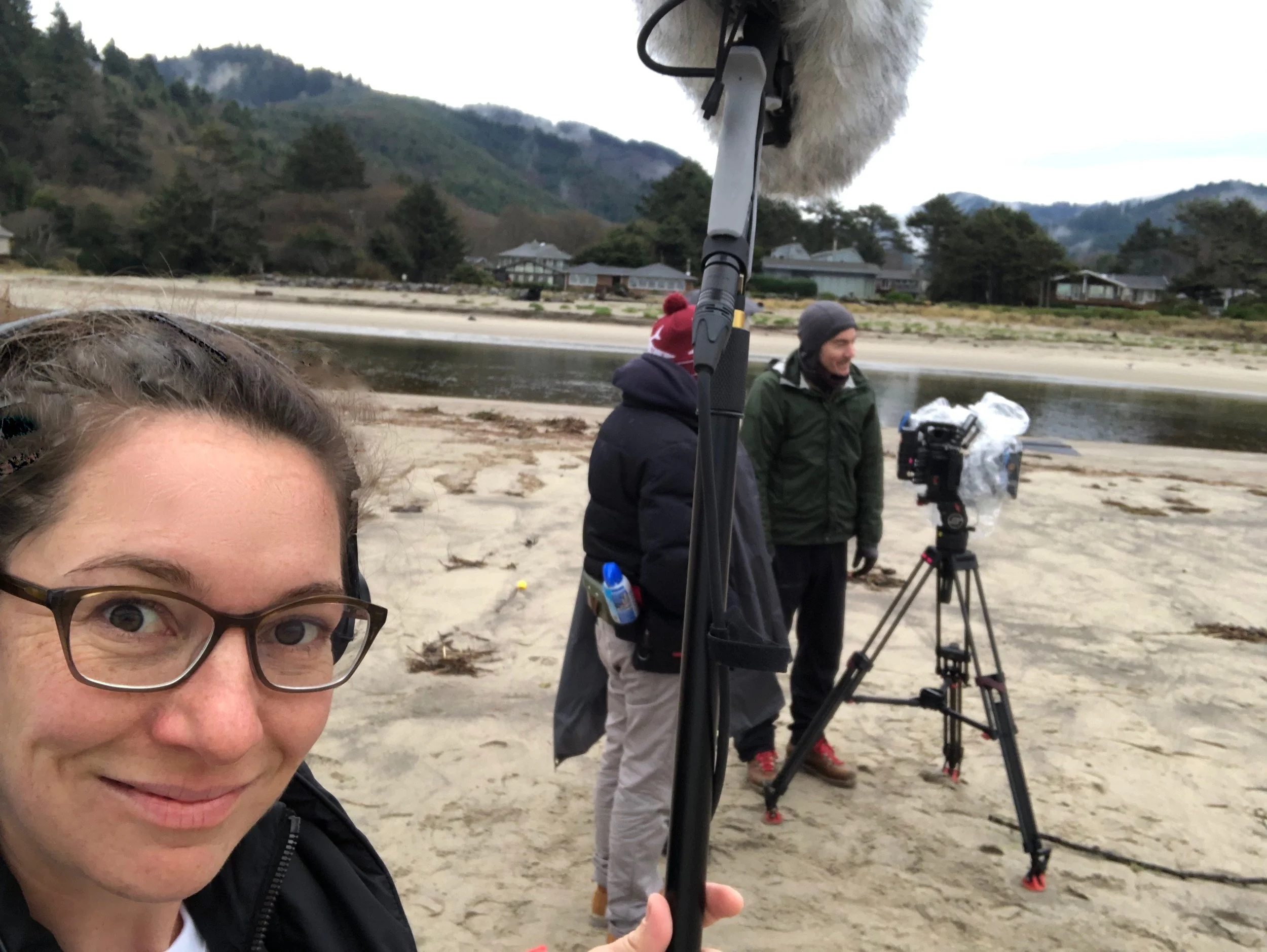
That’s me!
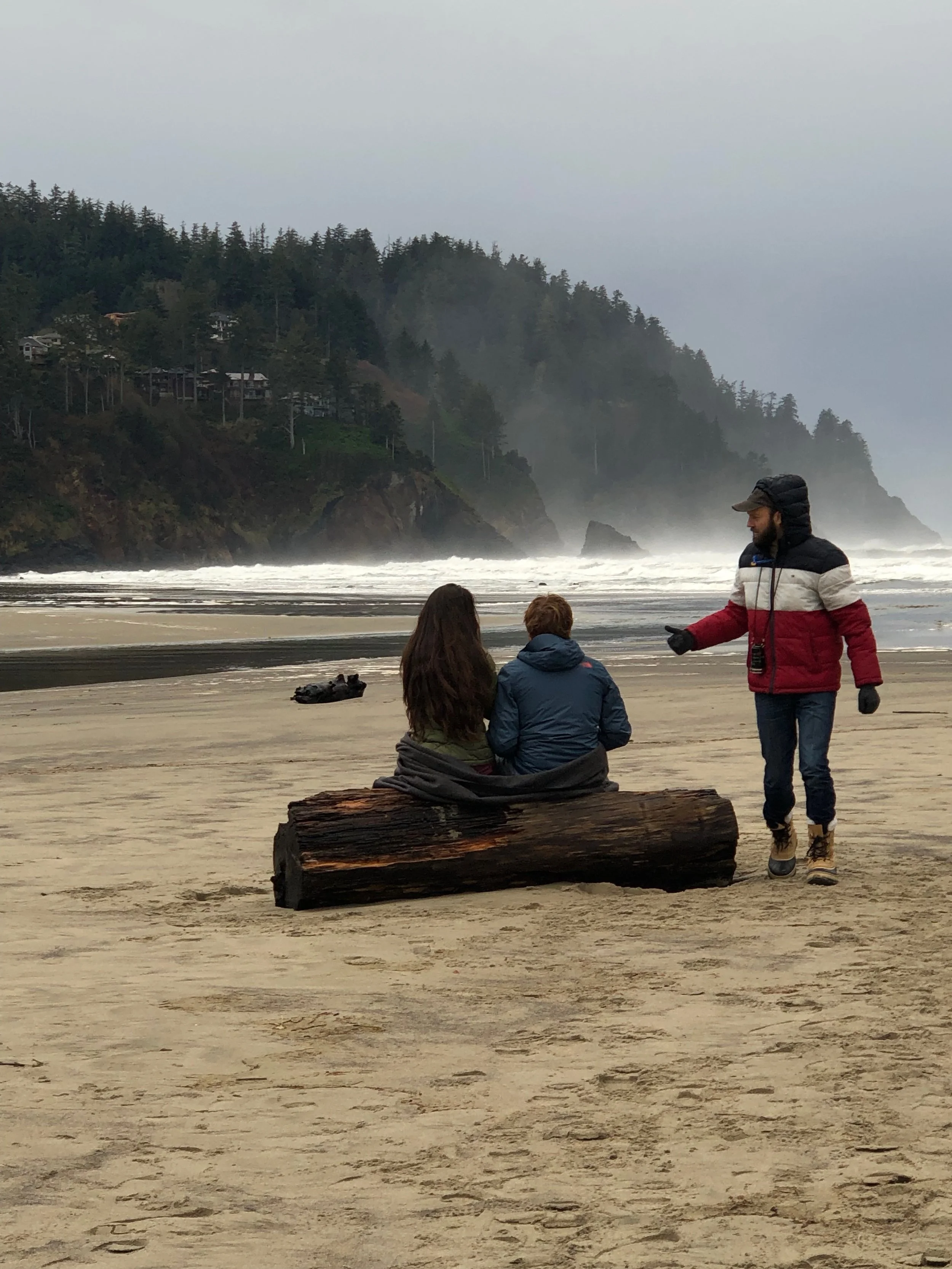
Taegen, the director, giving some last minute words to the lead actors before a take.

Action shot!
Day Six and the final day of shooting!
So of course, the last day of our shoot, when there are only 8 set-ups as opposed to 60 between the prior two days, that it stops raining. Completely sunny, although it was waaayyy colder. So, there’s that. I did have a fair amount of dialogue to record, as this is one of the last scenes of the film. The placement of the mic was somewhat awkward but nothing a little upper arm strength couldn’t handle. And just like that, we wrapped filming of Variance!
Next steps will be waiting for the final cut to get started on the music, however I’m currently listening to some film scores that the director has referenced to get my brain going. Since this is a sci-fi drama with some action, I anticipate some pretty intense music is in order. Stay tuned!
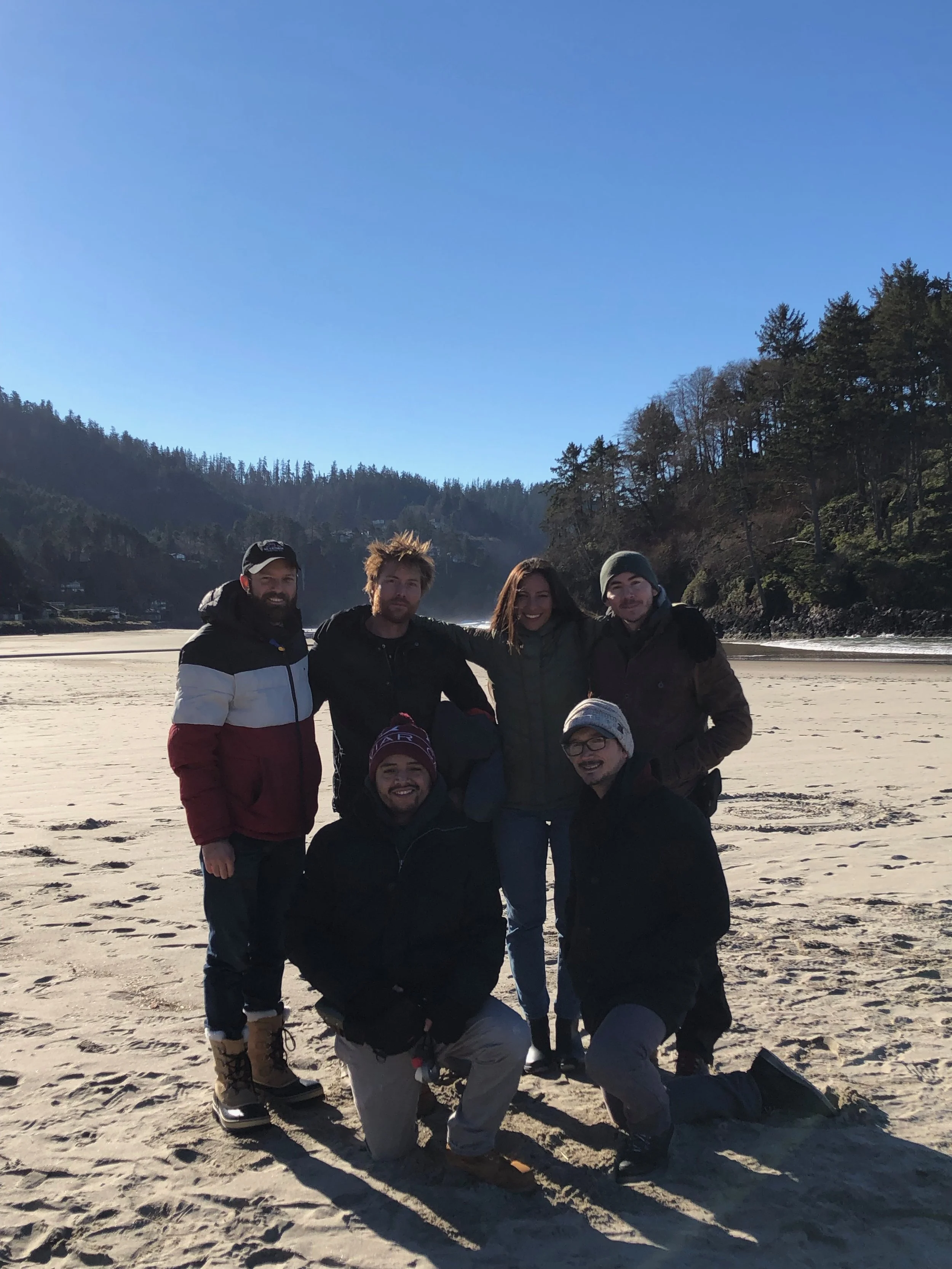
That’s a wrap!